A Life Shaped by Stage Lights and Strong Family Ties
I think of Patricia Ben Peterson as the kind of performer who moves through a room like a warm spotlight. She is not just a name in a cast list. She is a singer, actress, and later a social worker whose path crossed Broadway, regional theater, and public service. Her story carries the texture of American stage life in the late 20th century, but it also carries a family thread that begins in Portland, Oregon, and stretches into law, civic life, and the arts.
Patricia Ben Peterson was born in 1959 in Portland. From the beginning, her life seems to have been built on contrasts that worked together beautifully. On one side was a family grounded in public service and law. On the other side was performance, music, and the restless pull of the stage. That mix gave her a profile that feels both disciplined and theatrical, like a well tailored costume that still leaves room for movement.
Family Background and the People Closest to Her
When I look at Patricia Ben Peterson’s family, I see a circle of people who helped shape both her identity and the public understanding of her life. The names most consistently associated with her are listed below.
| Family Member | Relationship to Patricia Ben Peterson | Publicly Noted Details |
|---|---|---|
| Edwin J. Peterson | Father | Portland attorney and Oregon Supreme Court chief justice |
| Barbara Lee Peterson | Mother | Named in public biographical references as Patricia’s mother |
| Anna M. Peterson | Stepmother | Edwin J. Peterson later remarried, creating a blended family structure |
| Edwin Andrew Peterson | Brother | Public obituary material identifies Patricia as his sister |
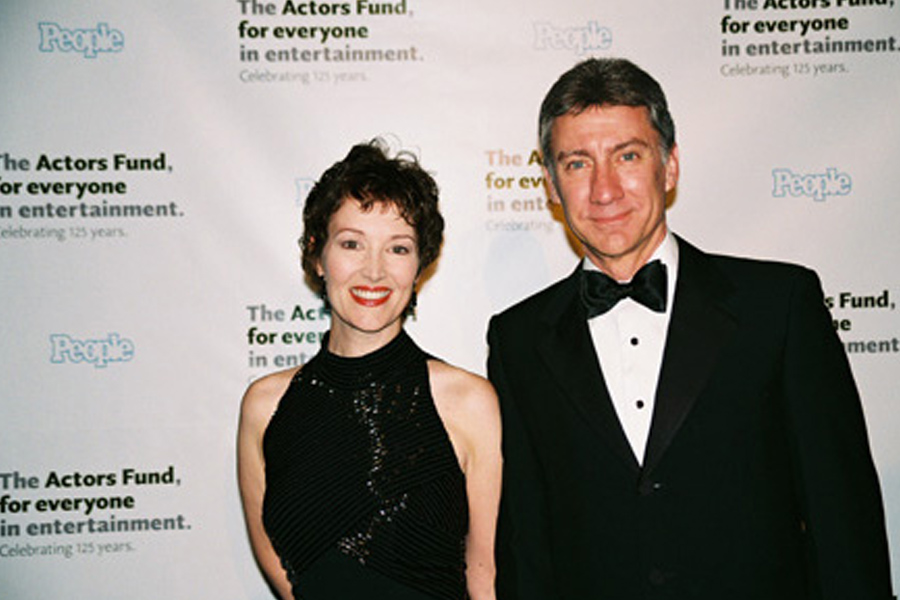
| David Garrison | Long-time partner | Actor and her most consistently named personal relationship |
Patricia’s family history goes beyond names, which is significant. It depicts a law-connected, leadership-oriented, and blended family. Legal luminary Edwin J. Peterson was her father. His public records as a lawyer and chief justice mean Patricia grew up in a society where words, authority, and duty mattered. Such an environment can subtly shape a person. It may not make a theater artist, but it can give one the fortitude to withstand a rigorous career.
Public records list her mother as Barbara Lee Peterson. That counts because it placed Patricia in a familial lineage, with a mother, father, siblings, and the emotional weight of family. Her brother Edwin Andrew Peterson is officially known, adding to the family portrait.
Though public documents indicate Anna M. Peterson as her father’s subsequent spouse, Anna Peterson appears in her family. Patricia’s family undoubtedly experienced remarriage, shared history, and shifting household ties, as do many families.
The Relationship With David Garrison
One of the most visible personal relationships tied to Patricia Ben Peterson is with actor David Garrison. Their names appear together repeatedly in theater and arts contexts, and their connection has become part of how people understand her personal life. I see this as more than a celebrity pairing. It suggests two people moving within the same artistic ecosystem, likely sharing the rhythms of rehearsals, performance nights, and the odd tenderness that can grow between people who understand stage life from the inside.
Their relationship also helps frame Patricia as someone whose private life was not entirely separate from her public one. In theater, that boundary often becomes porous. The backstage world spills into the everyday, and the everyday leaves its fingerprints on the work.
A Career Built on Range, Voice, and Staying Power
Patricia Ben Peterson built a career that feels like a long staircase with many landings. She was not defined by one role alone. She worked across Broadway, regional theater, and recordings, and her résumé shows a performer with range, stamina, and vocal power.
She appeared in major stage productions including Evita, Sweet Charity, Into the Woods, Guys and Dolls, Music of the Night, Company, Yiddle With a Fiddle, and Black No More. That list alone tells me something important. She was not someone who drifted through the industry. She worked in the kinds of productions that demand discipline and precision. These were roles that required musical intelligence, timing, and the ability to inhabit very different theatrical worlds.
Her Broadway work is especially striking. Patricia was part of the living machinery of big productions, and in theater that matters. Broadway is not a place where anyone survives by accident. You have to show up with skill and stay ready. Her work in Into the Woods and Company connects her to the Sondheim universe, which is its own kind of mountain range, full of steep vocal climbs and emotional cliffs. To be associated with that material means a performer had to be both technically solid and emotionally alert.
I also think her voice deserves special mention. Public descriptions of her note a remarkably wide range, close to four octaves. That kind of instrument is not common. It gives a performer not just volume, but color, agility, and a kind of musical architecture. With a voice like that, a song can become a corridor, a doorway, even a mirror.
Her career did not stop at the stage. She also contributed to recordings and special performances, including a featured soloist role at the Kennedy Center Honors for Elizabeth Taylor in 2002. That detail says a lot. It shows that her artistry extended beyond a single company or single venue. She became part of broader cultural moments.
A Later Pivot Into Social Work
My interest in Patricia Ben Peterson stems from her life after stage. She returned to school in 2003 and received a master’s in elderly social work. Not a small pivot. It transforms.
I love that change since it shows a person who didn’t lock identity away. The switch from performance to care work seems important. She started helping seniors live with dignity instead of beneath stage lights. She supervised social work for the Actors Fund at Manhattan Plaza’s Rodney Kirk Center. Somehow, the arc makes sense. She spent years in the arts and later assisted its members, often facing uncertainty, age, and financial pressure.
Her narrative bridges here. One side has a bright, noisy stage. On the other is constant, silent service. She crossed the bridge and continued.
Selected Timeline
| Year | Milestone |
|---|---|
| 1959 | Born in Portland, Oregon |
| 1970s | Moved toward professional theater work after early artistic development |
| 1982 to 1984 | Appeared in Evita on Broadway |
| 1987 | Worked in Sweet Charity |
| 1987 to 1990 | Associated with Into the Woods |
| Early 1990s | Performed in regional theater, including Happy End |
| 1992 to 1994 | Played Sarah Brown in Guys and Dolls |
| 1995 to 1996 | Appeared in Company and Music of the Night |
| 1998 | Appeared in Black No More |
| 2002 | Featured soloist at the Kennedy Center Honors |
| 2003 onward | Earned a master’s degree in geriatric social work and moved into social service work |
FAQ
Who is Patricia Ben Peterson?
Patricia Ben Peterson is an American stage actress and singer who later became a geriatric social worker. I see her as a performer whose life moved from Broadway and regional theater into service work, with both halves of that story carrying real weight.
Who are the main family members associated with Patricia Ben Peterson?
The family members most clearly tied to Patricia Ben Peterson in public information are her father Edwin J. Peterson, her mother Barbara Lee Peterson, her brother Edwin Andrew Peterson, and her long-time partner David Garrison. Anna M. Peterson also appears in the family structure through her father’s later marriage.
What is Patricia Ben Peterson best known for?
She is best known for her stage work in productions such as Evita, Into the Woods, Guys and Dolls, Company, and Sweet Charity. She is also known for her later career shift into social work.
Did Patricia Ben Peterson work outside of theater?
Yes. After years in performance, she earned a master’s degree in geriatric social work and worked with the Actors Fund in New York. That later chapter gives her public story a different kind of depth, almost like a second act written in a softer key.
Why is her family background important?
Her family background matters because it places her in a household shaped by law, public service, and later blended family relationships. That background helps explain the discipline and seriousness that seem to run beneath her artistic career.