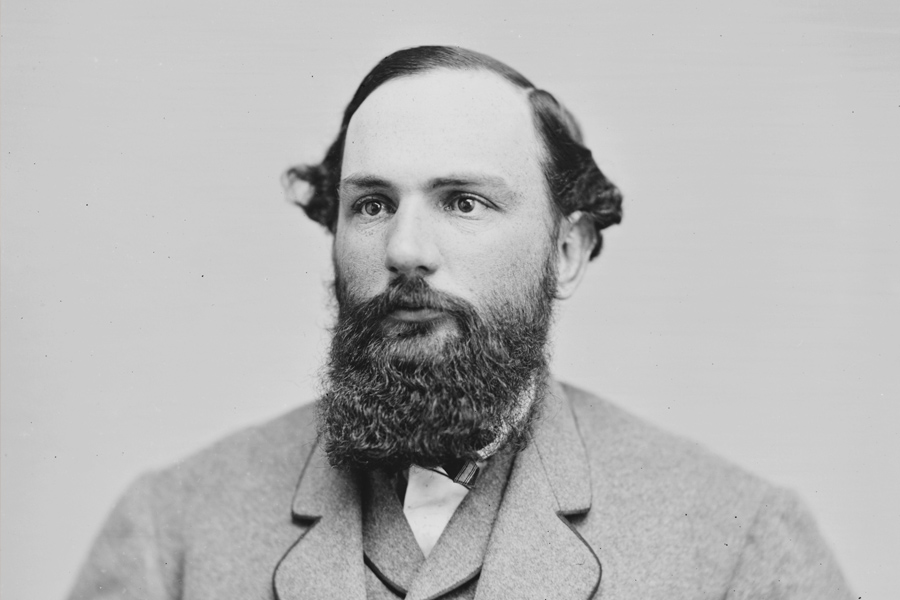
Early Life and Family Heritage
When I study W. H. F. Lee, whose full name was William Henry Fitzhugh Lee, I see a man whose life reflected both privilege and hardship. Born on May 31, 1837, at Arlington House in Virginia, he entered one of America’s most influential families. He was the second son of Robert Edward Lee and Mary Anna Randolph Custis Lee. His father affectionately called him “Rooney,” a nickname that remained with him throughout his life.
Growing up, Rooney Lee was surrounded by military tradition and deep family history. His mother was the only surviving child of George Washington Parke Custis, linking the family to Martha Washington through the Custis line. His paternal grandfather was Henry “Light Horse Harry” Lee III, a celebrated Revolutionary War hero.
The Lee household included seven children.
| Family Member | Relationship | Notes |
|---|---|---|
| Robert E. Lee | Father | Confederate general |
| Mary Anna Randolph Custis Lee | Mother | Custis heiress |
| George Washington Custis Lee | Older brother | Confederate general |
| W. H. F. Lee | Second son | Cavalry general and politician |
| Robert E. Lee Jr. | Younger brother | Planter and author |
| Mary Custis Lee | Sister | Never married |
| Anne Carter Lee | Sister | Never married |
| Eleanor Agnes Lee | Sister | Never married |
| Mildred Childe Lee | Sister | Never married |
Although the family frequently moved between Army posts because of Robert E. Lee’s military career, Arlington House remained the emotional center of their lives. It was where traditions, prayers, and family bonds took root.
Harvard Years and Early Army Career
Rooney Lee enrolled at Harvard College in 1854. Despite never finishing his degree, he made a lasting effect on his peers. He was roughly 6 feet 3 inches tall, had exceptional physical abilities, and joined Harvard’s rowing squad as the stroke oar.
Friends recalled him as joyful, self-assured, and inherently talented at leadership. His disposition resembled a solid oak that could provide refuge to others in trying circumstances.
He was commissioned as a second lieutenant in the 6th Infantry of the United States Army in 1857. Prior to his resignation in 1859, he participated in the Utah Expedition.
He decided to oversee White House Plantation in New Kent County, Virginia, rather than pursue a career in the military. The approximately 4,000-acre estate, which he inherited through his mother’s family, stood for both possibility and responsibility.
Marriage and Family Life
Rooney Lee married Charlotte Georgiana Wickham in 1859.
Their happiness was heartbreakingly brief.
Their son Robert Edward Lee was born in 1860 but died in 1862. Their daughter Charlotte Carter Lee was born in 1862 and also died during infancy.
While Rooney Lee remained imprisoned during the Civil War, Charlotte died of tuberculosis on December 26, 1863. He learned about the deaths of his wife and children only after becoming a prisoner, making this one of the darkest chapters of his life.
In 1867, he found happiness again by marrying Mary Tabb Bolling.
Together they welcomed several children, although several died young.
Two sons reached adulthood.
| Child | Birth | Later Life |
|---|---|---|
| Robert Edward Lee III | 1869 | Lawyer who lived at Ravensworth |
| Dr. George Bolling Lee | 1872 | Prominent New York gynecologist |
George Bolling Lee later became a respected physician in New York and carried the family line into the twentieth century. His children included Mary Walker Lee and Robert Edward Lee IV.
Mary Tabb Bolling Lee survived her husband by more than thirty years and carefully managed the family estate after his death.
Military Service During the Civil War
When Virginia left the Union in 1861, Rooney Lee resigned his civilian life and joined the Confederate cavalry.
His rise through the ranks happened quickly.
He served under the famous cavalry commander J. E. B. Stuart and proved himself dependable during numerous campaigns.
Some of the major campaigns in which he participated included:
| Year | Campaign or Battle |
|---|---|
| 1862 | Peninsula Campaign |
| 1862 | Second Manassas |
| 1862 | Antietam |
| 1863 | Brandy Station |
| 1864 | Overland Campaign |
| 1864 to 1865 | Siege of Petersburg |
| 1865 | Five Forks |
| 1865 | Appomattox Campaign |
By 1864, he had become one of the youngest major generals serving in the Confederate Army.
His leadership earned respect because he remained steady under pressure rather than seeking dramatic glory. Like a river carving its path through stone, his influence came through persistence rather than spectacle.
The Difficult Months as a Prisoner of War
The Battle of Brandy Station on June 9, 1863, changed everything.
Rooney Lee suffered both a saber wound and a gunshot wound to his thigh.
He recovered at Hickory Hill Plantation under the care of family members. His wife, mother, and sisters all helped nurse him.
Before he had fully healed, Union cavalry captured him on June 26, 1863.
He was transported first to Fort Monroe.
His imprisonment lasted approximately nine months.
For much of that time, he endured close confinement with limited freedom and few opportunities for family contact. Later he was transferred to Fort Lafayette in New York Harbor, where conditions remained restrictive.
His imprisonment became even more painful because it coincided with devastating family losses. His wife Charlotte died while he remained behind prison walls, and his earlier grief over losing both children deepened.
Political tensions also affected his treatment.
Union authorities regarded him as a valuable prisoner during disputes over prisoner exchanges and retaliation policies between the Union and Confederacy.
Finally, on February 25, 1864, he was exchanged for Union Brigadier General Neal S. Dow.
Instead of retiring after months of wounds and grief, Rooney Lee returned to active duty, accepted promotion to major general, and resumed command during the final campaigns of the war.
Life After the Civil War
Following the Confederate surrender at Appomattox in April 1865, Rooney Lee returned to a South transformed by war.
White House Plantation had suffered extensive destruction, including the loss of its main house.
Despite these setbacks, he devoted himself to rebuilding his agricultural operations.
After his mother died in 1873, he inherited Ravensworth Plantation near present day Springfield, Virginia. The estate became his primary home.
Agriculture remained one of his lifelong passions.
He served as president of the Virginia State Agricultural Society and encouraged improvements in farming practices across the state.
The discipline that had guided cavalry formations now helped organize fields, crops, and livestock.
Political Career
Rooney Lee gradually entered public service after Reconstruction.
From 1875 through 1878, he served in the Virginia Senate and occasionally acted as its presiding officer.
His experience as a planter gave him practical knowledge of Virginia’s agricultural economy, making him an influential advocate for rural communities.
In 1887, voters elected him as a Democrat to represent Virginia’s 8th Congressional District in the United States House of Representatives.
He remained in Congress until his death in 1891.
Although remembered primarily as a soldier today, he spent nearly as many years rebuilding Virginia through farming and politics as he had serving on horseback during the Civil War.
Personal Character and Daily Life
Rooney Lee was a very likeable man, according to the accounts given by those who knew him.
He had a kind demeanor and was physically strong.
Friends recalled his calm confidence, generosity, and sense of humor.
Throughout his life, family customs continued to be significant.
He carried on the family prayers and hymns that had been formed at Arlington House. These rituals provided stability even after the family was dispersed by the storms of war.
During the challenging years following the war, Rooney remained close to his brothers, Custis and Rob, and his father kept up a tight contact with him through supportive letters.
Death and Lasting Legacy
On October 15, 1891, Rooney Lee suffered a heart attack at Ravensworth Plantation. He was 54 years old.
He was first buried at Ravensworth before later being reinterred in the Lee Chapel crypt at Washington and Lee University alongside his parents and several siblings.
His life stretched across remarkable chapters of American history.
He experienced the final years of the great Virginia plantations, fought through the Civil War, endured imprisonment, rebuilt damaged estates, served his state in politics, and represented Virginia in Congress.
Through his surviving descendants, especially those descending from Dr. George Bolling Lee, the family lineage continued into the modern era.
FAQ
Who was W. H. F. Lee?
W. H. F. Lee, whose full name was William Henry Fitzhugh Lee, was a Confederate cavalry general, Virginia planter, state senator, and United States Congressman. He was the second son of General Robert E. Lee.
Why was he called Rooney Lee?
His father gave him the nickname “Rooney” during childhood. The exact origin remains uncertain, although it may have been inspired by an Irish gardener known to the family.
Did W. H. F. Lee attend college?
Yes. He entered Harvard College in 1854, where he became well known for rowing and athletics. He left before earning a degree.
How long was Rooney Lee a prisoner of war?
He spent approximately nine months in Union captivity after being captured on June 26, 1863, while recovering from wounds received at the Battle of Brandy Station.
How many times was W. H. F. Lee married?
He married twice. His first wife was Charlotte Georgiana Wickham, who died in 1863. His second wife was Mary Tabb Bolling, whom he married in 1867.
Did W. H. F. Lee have surviving children?
Yes. Although several of his children died young, two sons survived into adulthood: Robert Edward Lee III and Dr. George Bolling Lee.
What did Rooney Lee do after the Civil War?
He rebuilt his agricultural operations, managed White House and Ravensworth plantations, served in the Virginia Senate, became president of the Virginia State Agricultural Society, and later represented Virginia in the United States House of Representatives.
When did W. H. F. Lee die?
He died of a heart attack on October 15, 1891, at Ravensworth Plantation in Virginia at the age of 54.