The Man Behind the Name
I see James E. Darnell as one of those rare figures whose life reads like a long experiment that kept yielding sharper and sharper results. Born on September 9, 1930, in Columbus, Mississippi, he came of age in a world that was still learning how to read the language of genes. He moved through medicine and science with the steady force of a river cutting stone. By the time he reached adulthood, he had already set a pattern that would define the rest of his life, discipline, curiosity, and a taste for difficult questions.
He finished the University of Mississippi in just three years, which says a lot about his pace and focus. In 1951, he entered Washington University in St. Louis to begin medical training, and in 1955 he earned his M.D. After that came a sequence of appointments that look less like a resume and more like a map of modern molecular biology. He worked at the National Institutes of Health, spent time at the Pasteur Institute in Paris, and held academic positions at MIT, Albert Einstein College of Medicine, and Columbia University before joining Rockefeller University in 1974.
His career was not built on one headline discovery. It was built on many. He helped shape the field of RNA biology, helped define how cells control gene expression, and became deeply associated with cytokine signaling and the JAK-STAT pathway. In the hands of a lesser scientist, these subjects might have remained separate rooms. Darnell found the doors between them.
A Career Built Like a Cathedral
Consider Darnell’s scientific career a cathedral built one arch at a time. Because of its striking design, each piece supports the next and holds the building aloft.
He was Vincent Astor Professor and emeritus at Rockefeller University. He was academic affairs vice president from 1990 to 1991. His lab demonstrated how cytokines, such as interferons, may rapidly alter cell nucleus transcription. That led him to the JAK-STAT pathway, one of his most important areas of research in signaling and transcriptional control.
His writing counted. Coauthor of General Virology, Molecular Cell Biology, and RNA: Life’s Essential Molecule. Not casual books. They scaffold the field. A generation of scientists learned from them, often without realizing how much the language was impacted by the co-writer.
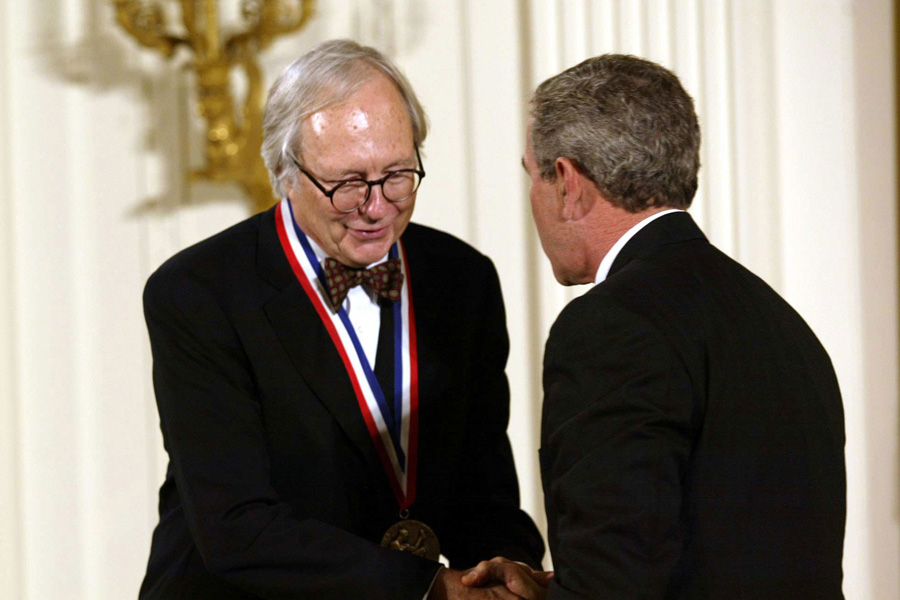
His awards were numerous. 1986 saw the Canada Gairdner International Award. 1994 brought the Paul Janssen Prize. 1997 brought the Passano Award. He got the National Medal of Science and Albert Lasker Special Achievement Award in 2002. He received the 2012 Albany Medical Center Prize. While numbers alone cannot convey that chronology, they illustrate a life acknowledged repeatedly for efforts that altered the field rather than decorated it.
Also, his mentoring record is impressive. Public accounts say he mentored nearly 100 young scientists. That matters. Scientific legacy includes discovery and how others think.
Family as a Public Thread
The family story around James E. Darnell is public in fragments, but those fragments still sketch a clear outline. He appears as a husband, father, stepfather, and grandfather, with each role tied to a different part of his life.
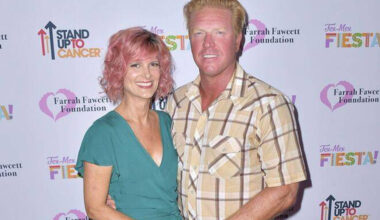
His wife in later public references is Kristin Holby Darnell. She is described as his spouse in connection with charitable and public events. Her name carries its own public identity, and in the material I reviewed she appears as a social and family presence in his later years. She also had a daughter, Phoebe White, which makes Phoebe James E. Darnell’s stepdaughter. That relationship is important because it shows that his family life was not only biological lineage, but also the broader architecture of a blended household.
An earlier wife, Jane R. Darnell, is named in public obituary material as the beloved wife of James E. Darnell. From that marriage, several children are publicly identified. Their sons include Christopher, Bobby, and Jonathan. One of the sons, Robert B. Darnell, stands out because he became a scientist in his own right and appears in public Rockefeller material as James’s son. The family pattern is clear here, knowledge passing forward like a torch, not copied exactly, but carried into a new generation.
Robert’s daughter, Alicia Darnell, is publicly identified as James’s granddaughter. That makes the family tree easier to read. James is not only a towering scientific figure in isolation. He is part of a line, a branching structure of people whose lives intersect with medicine, research, family, and public remembrance.
I also note that James E. Darnell’s family has been documented in a way that feels both intimate and public. Obituary notices, institutional profiles, gala references, and anniversary stories all preserve different angles. Together they create a portrait of a man whose private life was never fully private, but who still remained larger than the public record.
Personal Interests and Private Texture
I adore the humanizing details of huge figures. Older bios mention Darnell as a tennis and clarinet player. That modest mix reveals much. Tennis means rhythm, competition, and endurance. Clarinets suggest breath, phrasing, and patience. Many sciences need the same virtues.
His music tastes are also apparent. This detail reminds me that science is not a closed world. Has acoustics. It affects taste, memory, family, and habit.
His public life is also consistent. Mississippi to St. Louis, Paris to New York, medicine to molecular biology—the path is a series of bridges. He continued entering new area without losing his old ground.
Why His Work Still Matters
I do not think James E. Darnell belongs only to the history books. His work still lives in the methods and ideas scientists use now. RNA processing, transcriptional control, and cytokine signaling remain central to understanding disease and development. Cancer biology especially still leans on the logic of pathways he helped illuminate.
That is what makes his story feel alive. It is not frozen. It keeps showing up in new contexts. A 2002 observation can still echo in a 2025 discussion. A lab insight can become part of a medical vocabulary decades later. His influence moves like a current under the floorboards of modern biology.
Family Members of James E. Darnell
| Family Member | Relationship | Publicly Noted Details |
|---|---|---|
| Kristin Holby Darnell | Wife | Later spouse in public references, linked to charitable and social appearances |
| Jane R. Darnell | Earlier wife | Named in obituary material as his wife |
| Christopher | Son | Named publicly in Jane R. Darnell’s obituary |
| Bobby | Son | Named publicly in Jane R. Darnell’s obituary, also appears as Robert B. Darnell in later institutional material |
| Jonathan | Son | Named publicly in Jane R. Darnell’s obituary |
| Robert B. Darnell | Son | Scientist, publicly identified as James’s son |
| Phoebe White | Stepdaughter | Daughter of Kristin Holby Darnell |
| Alicia Darnell | Granddaughter | Publicly identified as the daughter of Robert and Jennifer Darnell |
FAQ
Who is James E. Darnell?
James E. Darnell is an American molecular biologist and physician whose work helped shape modern understanding of RNA biology, gene expression, and cytokine signaling.
What is James E. Darnell best known for?
He is best known for pioneering research on RNA processing and for major contributions to the study of transcription and the JAK-STAT signaling pathway.
Who are the most publicly documented family members of James E. Darnell?
His publicly documented family members include his wife Kristin Holby Darnell, his earlier wife Jane R. Darnell, his sons Christopher, Bobby, Jonathan, and Robert B. Darnell, his stepdaughter Phoebe White, and his granddaughter Alicia Darnell.
Did James E. Darnell have children involved in science?
Yes. Robert B. Darnell is publicly identified as his son and is himself a scientist, which gives the family a clear scientific thread across generations.
What makes James E. Darnell’s career important?
His career matters because he helped explain how cells control genes and respond to signals, work that still shapes biology, medicine, and cancer research today.